Ask a room full of owner-operators what their freight pays and every hand goes up. Two-forty a mile, three bucks a mile, whatever it is — they know it cold. Then ask them what it costs them to run a mile, and the room goes quiet. Most have never worked it out. And that one blank spot is the difference between running a business and just hoping.
Here's why it matters. If you don't know your cost per mile, you have no idea whether a load makes you money. That "good-paying" load at $2.60 a mile is only good if it costs you less than $2.60 to haul it. If your true cost is $2.40, you made twenty cents. If your true cost is $2.75, you just paid for the privilege of working — you moved money, you didn't make it, and you won't find out until the settlements don't add up and you can't figure out why you're always broke on a truck that's always rolling.
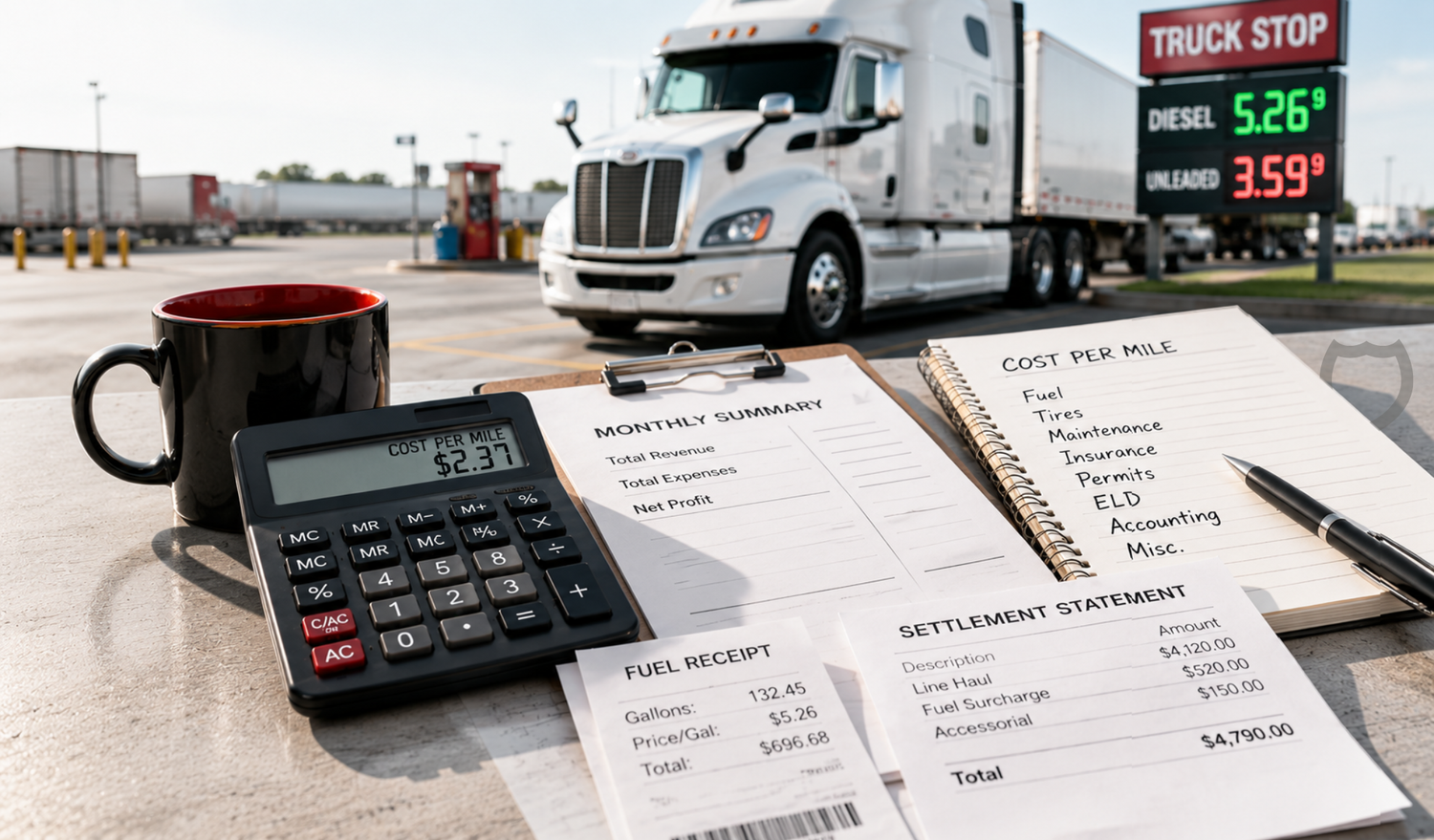
Your cost per mile comes in two piles, and you need both. The first pile is your variable costs — the stuff that only happens when the wheels turn. Fuel, tires, tolls, maintenance, def. Fuel alone will open your eyes. With diesel sitting around $5.25 a gallon this month, a truck getting six miles to the gallon is burning about eighty-eight cents a mile in fuel and nothing else. That's before a single tire, oil change, or repair.
The second pile is the one that sinks people: your fixed costs. The truck payment, the insurance, the plates, the permits, your ELD, the accountant. These don't care whether you drive. They show up every month whether you run 12,000 miles or sit in the yard for a week with a sick load board. And here's the trap in that — the weeks you sit are exactly when your cost per mile shoots up, because those fixed bills get spread over fewer miles. The driver who parks to "save money" during a soft market is often making his numbers worse, not better. You can't see that unless you're tracking the number.
Finding your cost per mile isn't complicated, and you don't need software or a degree to do it. Take one month. Add up everything the business spent — every fixed bill and every variable cost, fuel to phone. Then pull your total miles for that same month. Divide the dollars by the miles. That number, that one number, is what it costs you to turn a mile. Run it for three months and you'll have a rock-solid average you can trust. I ran an accounting business for owner-operators for over a decade, and I can tell you the ones who know this number to the penny are almost never the ones calling me in a panic.
And if you're thinking, I don't want to sit down every month and figure all of this out by hand, you don't have to. This is exactly the kind of information ProfitGauges was built to track. It takes the income and expenses you're already generating in your business and turns them into numbers you can actually use — including what it costs you to operate.
The important part isn't the software. It's developing the habit of looking at your numbers regularly instead of waiting until something feels wrong. Whether you calculate it yourself or use ProfitGauges, you should be able to answer the question: What does it cost me to run this truck?
If you want some help keeping those numbers in front of you, sign up for ProfitGauges and start tracking them.
One honest note: every operation is different, and a big decision — restructuring, buying a truck, changing lanes — deserves a real sit-down with your own accountant who knows your books, not a newspaper column. What I'm handing you here is the habit, not personalized advice.
So here's the work this week, and it's real work. Pull last month's fuel receipts, your settlements, and your fixed bills. Add it all up. Grab your total miles off your logs. Do the division. Whatever number falls out — write it on a sticky note and put it on the dash. Now, the next time a dispatcher or a broker throws you a rate, you'll know in about two seconds whether it feeds you or just flatters you.
You already know your truck's fuel mileage to the tenth. This is the same instinct pointed at the whole business. Know your cost per mile, and every load becomes a decision instead of a guess.
Be safe, be profitable, be responsible, and master the journey.